Monday, 29 December 2014

Another Chinese retailer lists OnePlus Two

Just a few weeks after Coolicool listed OnePlus’ upcoming smartphone, allegedly dubbed OnePlus Two, another Chinese online storeGeekbuying has listed the device, revealing some more details.

According to the listing, the smartphone will feature a Qualcomm Snapdragon 805 chipset with 2.7GHz processor and a 5.5-inch LTPS display with resolution of 1920x1080 pixels. It will come with 3GB of RAM, 64GB of internal memory (which cannot be expanded via microSD card), 16 megapixel rear camera, and 5 megapixel front camera.

The device will run Color OS, which is based on Android 4.4, and will pack a 3,300mAh battery. However, the most interesting information the listing reveals is that the device, which is priced at $538.19, will begin shipping on February 10 next year.

Needless to say, none of these specifications have been officially confirmed by OnePlus, so take it with a pinch of salt.

Friday, 26 December 2014

Xiaomi has sold 1 million smartphones in India so far

This year Xiaomi ventured outside of its home market, China, and into India. For many months now, it's been holding pretty much weekly flash sales in partnership with Flipkart, the biggest retailer in the subcontinent. And apparently those have been going quite well.

Xiaomi's boss for India, Manu Kumar Jain, has announced today via Twitter that the company has already managed to sell more than one million smartphones over there.

This has happened at some unnamed point earlier this month. That's certainly impressive given how limited Xiaomi's phone supplies have been for the subcontinent. It definitely looks like the smartphone maker has somewhat underestimated the demand for its products in India, which may mean it will manage to sell even more units next year.

On the other hand, companies such as OnePlusand even Micromax (through its Yu sub-brand) are anxious to steal customers away from Xiaomi so 2015 is surely going to be an interesting year over there.

Monday, 22 December 2014

BlackBerry and Boeing to release a self-destructing smartphone

BlackBerry’s reputation in the mobile world lays on two pillars – data security and refusal to blindly follow design trends. That’s why the Canadian company seemed like the most obvious partner choice for Boeing when the aircraft manufacturer decided to build a smartphone of its own.

BlackBerry’s CEO spoke to Reuters, confirming that the two companies have started the development of the Boeing Black phone. Featuring call encryption, the Android-based smartphone is aimed at government agencies and other types of business where data protection is crucial.

And while call encryption isn’t anything new or that hard to come by the other security feature of the Boeing Black phone is far more interesting. Apparently, the Black phone will be able to self-destruct if tampered with, which should provide further security for sensitive data if the phone is lost or stolen.

No specifics were given on how the whole self-destructing thing will work or how dangerous it will be for the current holder. All we know is that the phone will feature dual SIM slots and that it will be powered by Android, while also utilizing the BlackBerry Enterprise Service 12.

It’s already being offered by Boeing to its partners though, so its production start shouldn’t be too far away.

Nokia N1 Android tablet launches in China on January 7

Back in November, Nokia (the part of the company that wasn't sold off to Microsoft)announced its first ever Android-running tablet, the N1. We got specs and pricing information then, along with a very vague release time frame of "Q1 2015".

Today though a rumor out of China has that down to an actual launch date - January 7. Because the translation from Chinese isn't perfect, it's not 100% clear right now if that's the day starting on which those in China will be able to purchase the Nokia N1, or just the date of its official introduction for the Chinese market.

Regardless of that, however, it looks like the "Q1" estimation is about to turn into a January release for the first ever Nokia tablet to run Android. This still doesn't tell us anything about when (or if) we might see the N1 elsewhere, since during the official announcement Nokia only mentioned China as the initial launch country. Other places are due to get the tablet at some later point in time. Hopefully that will happen soon, perhaps still inside that "Q1 2015" window, otherwise the N1's specs risk getting old soon. And the hype surrounding it may die down somewhat too.

An actual price for China hasn't been leaked yet, but the tablet should cost the rough equivalent of $249, which is the official number (sans taxes though).

The Nokia N1 comes with a 7.9-inch 2,048x1,536 touchscreen, an 8 MP rear camera, a 5 MP front snapper, an Intel Atom Z3580 chipset with a 2.3 GHz quad-core CPU, 2GB of RAM, 32GB of storage, and a 5,300 mAh battery. It will run Android 5.0 Lollipop with Nokia's Z Launcher on top.

Thursday, 18 December 2014

13-inch Sony Xperia Z4 Tablet Ultra allegedly in the works

Sony is expected to launch the Z4 generation of its flagship devices soon and we've already seen initial rumors for the lot – the Xperia Z4, a compact version, a phablet version and a Z4 Tablet. A new rumor alleges that there will be one more device, a 13" tablet.

Dubbed the Xperia Z4 Tablet Ultra (not to be confused with the Z4 Ultra phablet), the rumored specs sound more like a wishlist than those of an actual 2015 device. We start off with the unusual screen, Triluminos IPS with X-Reality, of course, which will supposedly have 3,840 x 2,400 resolution – that's 16:10 4K UHD.

A Qualcomm Snapdragon 810 with a max CPU clockspeed of 2.86GHz will provide the oomph, coupled with an unlikely 6GB of RAM (2x 3GB LPDDR4). There will be 64GB of storage and PS4 Remote Play support, which sound more believable.

The camera is also trumped up – an 1/2.3" Exmor RS sensor with an f/1.8 Carl Zeiss Sonnar T* lens and just 8MP resolution. That’s probably the Superior Auto resolution as the rest sounds like an improvement over the Xperia Z3 camera with a better lens (Zeiss f/1.8 instead of Sony G Lens f/2.0).

The Sony Xperia Z4 Tablet Ultra will be a slinky 8.6mm thick and pack a massive 12,100mAh if the rumored specs are to be believed. The image by itself is quite suspicious, holding a massive 13" tablet with such thin bezels will not be comfortable. Also, why is it portrait-oriented (going by the logo and front-facing camera).

All in all it sounds too good to be true. We'll gladly admit if we are wrong and Sony does pull this out monster at CES or MWC 2015, but for now we're skeptical to say the least.

ZTE unveils fully voice-powered Star 2 smartphone

ZTE has announced a new smartphone today. It's called the Star 2, and interestingly this is not the device we've seen getting certified for sale in China by TENAA only a few days ago. Design-wise, it's very close to its predecessor, the Star 1, which was unveiled back in April.

But the Star 2's main claim to fame is its extensive voice control support. This isn't just an app - you can do a lot of stuff just by voice. Opening, exiting, and switching between apps, snapping pictures, playing music, and much more. For example, if you lift the phone to your ear, it will ask you who you want to call. The voice control system is active even when the phone isn't connected to the Internet, and ZTE boasts that it has a response time of 1.2 seconds and a 90% success rate even in noisy environments.

  
ZTE Star 2

When it comes to hardware, we're looking at a 5-inch 1080p touchscreen, a 13 MP rear camera with dual-LED flash, as well as a 5 MP wide-angle front camera. Running the show is a Qualcomm Snapdragon 801 chipset with a 2.3 GHz quad-core CPU, 2GB of RAM, and 16GB of built-in storage that's expandable via microSD cards.

The ZTE Star 2 supports 4G LTE networks, and it has a 2,300 mAh battery. It runs Android 4.4 KitKat with the Chinese company's own MiFavor 3.0 UI on top. It's just 6.9mm thin, and it has a glass back and an aluminum frame. The handset is priced at CNY 2,499, which is about $402 or €327.

Lumia Denim update arrives in Europe and India

Yesterday Microsoft started rolling out the much anticipated Lumia Denim update for certain smartphones in China. Even thoughDenim was announced back in September, we weren't expecting it to reach Europe until next year, because of what one UK operator told us.

Well, it turns out that estimation was wrong, since Lumia Denim is now also rolling out to select devices in select markets in Europe. And it's made its way to India too, where it's hitting the Lumia 520 and Lumia 525 units over there.

In Europe, around 30 countries already have at least one Lumia model getting the new software. The full list is available from Microsoft here. The company has also made things official today, but it did say that a wider rollout would only come in early January. Either way, from this point on you probably have at most a few weeks of waiting to do to see Lumia Denim on your phone.

This release comes with a much enhanced Camera app, improved Glance Screen, and "Hey Cortana!" voice activation. The full list of features was detailed by Microsoft last month

Gresso launches new luxury Android smartphone

The Swiss company Gresso has made a name for itself over the years in the realm of luxury technology. Its line of premium phones and accessories has now grown bigger with the addition of Gresso Regal Black Edition.

The premium device has a metal body, crafted out of five solid titanium plates and manually polished for the best possible combination of light-weight construction and durability. With a thickness of only 8.8mm Gresso boast that their new handset is the slimmest smartphone on the luxury market today.

The Regal Black Edition will be a limited offer and only 999 pieces will be produced. Each of them will have an 18 karat gold insert on its back panel, featuring the unit number, as well as the total number of devices in existence, for convenience when referencing exclusivity, we suppose. The company even offers you the option to choose your own number during the purchase. The rest of the back is coated with PVD for an exquisite black finish.

As far as hardware on the device goes it features a 5-inch Full HD display, a 1.5 GHz quad-core processor, with no specific manufacturer or model cited, as well as 2GB of RAM and 32GB on-board storage. The handset has two cameras - 13MP main and 5MP front-facing and will run Android. It is offered in three variants - the "budget" Regal R1, priced at $3,000, which comes with a titanium insert plate and no PVD coating. And the Regal R2 and R3, both costing $5,000 with a white and yellow gold logos and plates respectively.

Each of the devices is manually assembled by a single craftsman and with only 999 available you should definitely hurry if you want to catch one of the 9 repeating digit ones, which we all know are the ones that truly send out a definite social status message.

Friday, 12 December 2014

Amazon Android app disappeared from Google Play store

Amazon’s primary Android app is rather mysteriously missing from the Google Play store. The application is not completely gone of course, but has been pulled from the official store and no longer pops-up in searches, although it is accessible through a direct store link.
This comes as a direct consequence of Amazon’s fairly recent addition of an “Apps and Games” sectioninto its main application. The functionality was mostly their own app store baked right into the primary shopping software. This was a huge leap forward for the Seattle-based online giant as it allowed for applications to be delivered seamlessly to devices, instead of having to be download from the website and side-loaded like before.
But the real reason for Amazon’s sudden withdraw is legal in nature. Google recently made some alterations to its Developer Distribution Agreement, presumably precisely to prevent third-party app stores from being available within the official Play store. Prior to the alterations section 4.5 of the policy stated:
Non-Compete. You may not use the Market to distribute or make available any Product whose primary purpose is to facilitate the distribution of software applications and games for use on Android devices outside of the Market.
Which has now been changed to the much more concrete:
Alternative Stores. You may not use the Store to distribute or make available any Product which has a purpose that facilitates the distribution of software applications and games for use on Android devices outside of the Store.
This of course is a pretty justified move on Google’s part. Although many users are sure to disapprove of the decision it makes little sense to facilitate direct competition in delivering applications. Furthermore it might also put Google’s tight control over customer security and content quality in jeopardy, as the policy would theoretically allow most less than reputable app stores to be easily available to users and install questionable content on their devices. Amazon issued an official statement and had this to say about the matter:
We launched a new Amazon App for Android Phones on September 9 that provides an award-winning mobile shopping experience, enables customers to discover and purchase all of Amazon’s digital catalog, and provides customers access to the Prime Instant Video player and unlimited streaming of over 40,000 movies and TV episodes. Google subsequently changed their Developer Distribution Agreement on September 25. As a result, we removed the app from Google Play and published the Amazon Shopping app. Customers who want the best Amazon experience on their Android phone, including access to Prime Instant Video and Amazon’s entire digital catalog, can still get the Amazon App for Android Phones at amazon.com/androidapp.
As of writing this article the main Amazon Android app still does not appear in Play store search results. As already mentioned its direct link is functioning and it appears that Amazon has simply done away with the “Apps and Games” section and is only a matter of time until their app is easily accessible once again. The statement also made it clear that a full version of the application will still be available on Amazon’s web site, so not all is lost. Amazon still plans to deliver an ever-growing array of content to its Android users, including apps and games in whatever manner they can.
In any case it appears that Google’s new policy on alternative application stores is here to stay and has affected a lot of other similar services as well, like the Humble Bundle app, which was recently pulled for the same reason. So if you enjoy Amazon’s Free App of the Day or an awesome local content supplier, who happens to break the new rules as well you will probably have to look for updates and support outside the Play store in the future.

Nexus 5 production stops, but you can still buy it

With the Nexus 6 already here to carry on the family legacy it is only natural that the days are numbered for the Nexus 5.
But the LG Nexus 5 still has a lot of appeal as the last-available budget-oriented Nexus device, a long-standing tendency for the smartphone line, which seems to come to an end with the Motorola's premium offering. A report surfaced today, stating that the production of the Nexus 5 has ceased. But what does that mean in terms of its availability?


It is highly unlikely that the handset will magically disappear from the consumer market altogether. Vendors are sure to be sitting on some stock. The real question in how long will the LG pure Android device be available on store shelves.
In the US the Play Store has been consistently out of Nexus 5 inventory, which does not foretell very long future availability for the device. This was further backed up by a recent statement form a Google spokesperson, who stated that:
Once they are gone, they’re gone, so we’d suggest people get them while they can.
There might however still be time to grab one as further comments clarified that Nexus 5 sales will continue through Q1 2015, or as the tech giant stated:
Nexus 5 will continue to be available for sale on Google Play and through select retailers in Q1 2015.
So if you plan on acquiring a Nexus 5 be sure to do it quickly or else you're in for a tough scavenger hunt around local resellers once backed-up stock is all cleared out.

Thursday, 11 December 2014

Microsoft announces January 21 event for Windows 10 consumer presentation

Microsoft will hold a Windows 10-related event on Wednesday, January 21, 2015. Terry Myerson, Joe Belfiore, and Phil Spencer from the Operating Systems Group will all be speaking, as will CEO Satya Nadella.

The company has only published its official invite for now (which you can see above), choosing not to specifically say what the event will be about. However, a rumor from last month said we’d hear all about the consumer-facing features of Windows 10 for PCs “towards the end of January”. So this seems to be that. If so, then on this occasion Microsoft will also talk about Windows 10 on phones and tablets for the first time.

Windows 10 was first unveiled back in September, but at that event the focus was on developer-facing features and additions, and the PC OS. On the other hand, the software giant did boast about creating “one platform” and one store for multiple device form factors, so now we’re intrigued about what Windows 10 could bring to the company’s mobile efforts. And it sure looks like we’ll find out in little over a month.

Meizu teasers promise a Dec 23 event, likely for the Blue Charm

Meizu has scheduled an announcement quite close to Christmas – December 23 – which will be held in Beijing. The company has officially released only tantalizing tidbits, but the rumor mill claims that Meizu is going after Xiaomi's Redmi 1S and Redmi Note affordable devices with a new Blue Charm line.

Going by the rumors, the line will consist of the Meizu K52 (a codename, obviously), which isset to be a super mini with a 4.6" 1080p screen, octa-core Cortex-A53 processor (64-bit enabled), 2GB of RAM and Mail-T760 GPU. Early pricing info is that the K52 will be in the CNY 1,000 range ($160 or so), the only official statement is that CNY 800 ($130) is too low.

The latest image posted on Meizu's Facebook account says "no blue," which may just be the company's way to toying with our expectations of the Meizu Blue Charm Note. The phablet is expected to pack a 5.5" screen and the same chipset as the Meizu K52. Despite its name, the Blue Charm Note will come in a variety of bright colors, including orange.

These devices will most likely run Android, though Meizu has plan for an Ubuntu version of its MX4 flagship so it just might throw us a curve ball.

64-bit Xiaomi passes the TENAA, is it the Redmi 2?

A new Xiaomi smartphone has passed through the TENAA with a couple of images and a peek at the specs. The device looks much like theRedmi 1S and could prove to be its successor - the Redmi 2.

It's going to arrive with a 4.7" 720p display and a 64-bit chipset (likely the Snapdragon 410) with a quad-core 1.2GHz processor and 1GB of RAM. Other confirmed specs include 8GB of expandable storage, 8MP back camera, 2MP front one, a 2,220mAh battery and Android 4.4.4 KitKat.

  
Mysterious Xiaomi smartphone

The listing also revealed that the rumored Redmi 2 has three red-colored capacitive keys under the screen as customary to Xiaomi phones. The power button and volume rocker are on the right side, there's an LED flash underneath the 8MP camera lens and a speaker grille to the left of it.

Rumor has it the upcoming Xiaomi smartphone will pack LTE (TD LTE and LTE FDD) alongside WCDMA. The expected weight of the device is tipped at 134g.

  
Mysterious Xiaomi smartphone

The Xiaomi Redmi 2 is expected to arrive in black, white, red, orange, yellow, green, blue and purple and have a price around RMB599-699 (around $100).

Qualcomm Snapdragon 810 SoC will support 450 Mbps LTE

It's already pretty clear that most of next year's flagship Android smartphones will be powered by Qualcomm's upcoming Snapdragon 810chipset. A while back this was rumored to have encountered some issues, but the company making it has assured us that it's on track for arelease in the first half of 2015.

And when it does make it into your next handset, the Snapdragon 810 will support even speedier LTE networks than previously thought. That's because Qualcomm has today announced it will upgrade the chip to support Cat.9 LTE, which comes with theoretical peak download speeds of 450 Mbps. That's up from the Cat.6 LTE which the Snapdragon 805 tops out at, enabling 300 Mbps downloads in the best of conditions.

The maximum theoretical peak upload speed will remain 50 Mbps, as it has been since Cat.3 LTE devices appeared on the market long ago. Cat.10 LTE will go beyond that, up to 100 Mbps for upload, but apparently we're still going to have to wait for that.

The Snapdragon 810 will achieve the 450 Mbps maximum speed because its modem will be able to utilize three 20 MHz carriers simultaneously, through carrier aggregation (CA). The company has already tested its solution with "multiple commercial network and test equipment companies, as well as an over-the-air demonstration in a commercial network environment" and found that it works as advertised.

This will be Qualcomm's first SoC to feature Cat.9 LTE. And of course it will be backwards compatible with earlier standards, such as GSM/EDGE, CDMA1x/EVDO, TD-SCDMA, and WCDMA/HSPA+.

Cyanogen-powered Micromax Yu phone launches on Dec.18

Last month, Micromax officially announced its plans to create a new mobile device brand - Yu. The devices using this brand are to be sold online only, emulating the business models of Chinese companies such as Xiaomi and OnePlus. The first smartphone in the series was then said to get unveiled sometime in December, and today we know exactly when that will happen.

Micromax has apparently started sending invites for its Yu event, which will take place on December 18. The invite itself doesn't reveal any details about the first Yu handset, as you can see.

However, according to Micromax co-founder Rahul Sharma, "the phone is going to be a monster", as it will have "really cool specs". So we should probably expect a high-end offering for the new brand's debut.

Also on December 18 we should find out which Indian ecommerce sites will be offering the Yu phone, as Micromax has reportedly been negotiating with various companies in the field.

As for software, Cyanogen has committed to an exclusive relationship with the Yu brand from Micromax, which has even meant disappointing prospective owners of the OnePlus One in the subcontinent, who won't be receiving over-the-air updates for their devices running the well known custom ROM.

Hangouts for Android gets Material Design update, stickers, video filters, and more

If you have been using Hangouts for some time now, you’d know the app was in some serious need for overhaul. Not only was it not updated to Google’s new Material Design but also had several other issues.

That all seems to have been taken care of in the latest update, however, which not only brings an updated design but also several other features and improvements. For starters, the app now conforms to Material Design guidelines and looks a lot better, if not significantly better.

Secondly, there is now support for stickers. For some odd reason, Google decided to add sticker support for Hangouts on iOS long ago and it was missing on Android until now but it’s finally here. Other than the stock animated emoji stickers there are a whole bunch more that are not found on the iOS version. There is no option to download additional stickers right now, though, like on Facebook Messenger and some other messaging apps.

Next are filters for video calls. You can choose from different color filters for your video calls, if you’re into that kinda stuff. Just swipe on the screen the way you do on Snapchat to add them.

Hangouts now also uses your registered number to help others find you using your number, the way, say, WhatsApp works. Lastly, there is now a ‘Last seen’ status for others to see when you last were online, just like on WhatsApp, which you can disable if you want.

The update is rolling out now but could take a few days to be available for download through the Play Store, You can head over to this link to sideload the APK if you want.

Tuesday, 9 December 2014

Acer Liquid Jade S goes official with 64-bit MediaTek SoC

Acer took the wraps off the Liquid Jade S smartphone. An updated version of the Acer Liquid Jade, the dual-SIM newcomer is the Taiwanese manufacturer’s first device with 64-bit chipset.
Acer Liquid Jade S packs MediaTek MT6752M SoC with 1.5GHz octa-core CPU. The rest of the device’s specs include 2GB of RAM, 16GB of expandable memory, 5” 720p IPS display, and 13MP main camera. The handset boots Android 4.4.4 KitKat.
Physical measures of the Acer Liquid Jade S are 143 x 69 x 7.78mm, while its weight tips the scale at 116 grams. The smartphone is powered by a 2,300mAh battery.
The smartphone will launch on December 18 in Taiwan for 6,990 TWD (about $224). A launch in India is also in the cards.

Snapdragon 810-powered Galaxy Note 4 now in testing

A rumor is currently circulating, stating that theSamsung Galaxy Note 4 will soon be getting with a brand new chipset. The SoC in question is allegedly the Qualcomm Snapdragon 810. Samsung's flagship device currently comes in two hardware flavors - the in-house developedExynos 7 Octa and the Qualcomm Snapdragon 805.

These are both solid chips, but the Snapdragon 805, being by far the more popular and powering significantly more units is lacking in one particular respect - it features a 32-bit architecture. This could potentially cause issues with the phablet's futureproofing, given the strong push to a 64-bit application ecosystem, introduced by Android 5.0 Lollipop.

The Snapdragon 810 remedies this issue, as it is a true 64-bit octa-core CPU. It also brings the Adreno 430 GPU to the table, which is also a significant improvement over the current Adreno 420 found in the Galaxy Note 4.

The new device is allegedly already being tested by the three major South Korea mobile carriers, but that is unconfirmed either. A Snapdragon 810 Note 4 sounds tantalizingly good, but for the time being all we can do is wait for further development to the story.

Worse cyberattacks expected in 2015: McAfee


WASHINGTON: A series of spectacular cyberattacks drew headlines this year, and the situation will only worsen in 2015 as hackers use more advanced techniques to infiltrate networks, security researchers said Tuesday.

McAfee Labs' 2015 Threats Predictions report sees increased cyber-warfare and espionage, along with new strategies from hackers to hide their tracks and steal sensitive data.

"Cyberespionage attacks will continue to increase in frequency," the report said.

"Long-term players will become stealthier information gatherers, while newcomers will look for ways to steal money and disrupt their adversaries."

McAfee said small nations and terror groups will become even more active and will "attack by launching crippling distributed denial of service attacks or using malware that wipes the master boot record to destroy their enemies' networks."

At the same time, cybercriminals will use better methods to remain hidden on a victim's network, to carry out long-term theft of data without being detected, the researchers said.

"In this way, criminals are beginning to look and act more like sophisticated nation-state cyberespionage actors, who watch and wait to gather intelligence," the report said.

The report also said hackers are looking to target more connected devices, including computers in the farming, manufacturing, and health care sectors.

"The number and variety of devices in the Internet of Things (IoT) family is growing exponentially. In the consumer space, they are now seen in appliances, automobiles, home automation, and even light bulbs," McAfee said.

McAfee said it is already seeing hackers targeting devices such as webcams with weak security and industrial control systems. But it sees health care as an especially worrisome sector.

"With the increasing proliferation of healthcare IoT devices and their use in hospitals, the threat of the loss of information contained on those devices becomes increasingly likely," the report said.

It noted that health care data "is even more valuable than credit card data" on hacker black markets.

McAfee says other threats will also grow, including "ransomware," which locks down data and forces the victim to pay a ransom to retrieve it, and attacks on mobile phone operating systems.

In the retail sector, digital payments may cut the risk of credit-card skimmers, but hackers may be able to exploit wireless systems such as Bluetooth and near field communications (NFC) used for mobile payments.

"With consumers now sending payment information over a protocol with known vulnerabilities, it is highly likely that attacks on this infrastructure will emerge in 2015," the report said.

The report comes in the wake of news about large-scale cyberattacks that have been linked to Russia or China, and a major infiltration of Sony Pictures which stole massive amounts of data.

In retail, Home Depot and others have reported data breaches affecting millions of customers.

"The year 2014 will be remembered as the year of shaken trust," said Vincent Weafer, senior vice president at Intel-owned McAfee.

"Restoring trust in 2015 will require stronger industry collaboration, new standards for a new threat landscape, and new security postures that shrink time-to-detection."

Next Samsung Exynos SoC rumored to feature Cat.10 LTE

LTE Cat. 6 is quickly becoming the standard with new flagship handsets. It delivers quite respectable data speeds of up to 300Mbps on the downlink wherever capable enough networks are available.

And while carriers still have a long way to go to catch up to current tech, chipset manufacturers are already preparing to move forward. Recently Qualcomm announced a Cat.10 LTE-capable chip, which boasts speeds of up to 450 Mbps. The chipset in question, however, is not the Snapdragon 810, that will power a lot of next generation flagships, as it features Cat. 6 LTE.

But surprisingly enough, Cat. 10 modems might be closer to consumer markets than we thought. According to the Korean media, Samsung will be shipping Exynos devices with the new technology as early as next year. Rumors even extend further and speculate that the Samsung Galaxy S6 might support the new bandwidths in its Exynos-powered version.

This marks a huge step forward for Samsung for two main reasons. Firstly if the Korean tech giant does manage to incorporate Cat. 10 LTE in consumer devices in time for the arrival of the next Galaxy S flagship, that would give the company's own SoC a formidable advantage over Qualcomm's Snapdragon series.

Perhaps even more importantly this would mark another move towards a full in-house chip manufacturing process for Samsung. Having its own CPU, GPU and Modem would allow Samsung to pursue new development strategies and consumer markets.

This, however is still entirely in the realm of speculations and for the time being Samsung will most likely be sticking to the current scheme of offering Qualcomm chips its their own.

There are a number of reasons for this arrangement ranging from lower costs to marketing and manufacturing concerns and Samsung might even never achieve, or for that matter want a completly closed production circle.

Kirin-powered Huawei Honor 4X gets listed before announcement

According to an oizoioi report, a Kirin 620-powered version of the Huawei Honor 4X is now available for pre-sale. This is particularly interesting given the fact that the company hasn’t yet announced the device - a launch event is scheduled for December 16.

The device is powered by the Kirin 620, rather than the Snapdragon 410 used on the original version. The home-baked chipset still offers 64-bit and LTE support, but it features an octa-core CPU and the Mali 450 GPU.

Other features include a 5.5 inch HD display, 13 MP rear camera, and 5 MP front camera. In addition, the device packs in a 3000mAh battery, and will be available in two versions: a lower-end version with 1GB of RAM and a higher end version with 2GB of RAM.

As for the price, the report says the 1GB version is expected to retail for 799 yuan ($129), while the 2GB version is expected to retail for 999 yuan ($161).

Aside from the Honor 4X LTE, the upcoming event will also see the launch of the Honor 6Plus with Dual Rear Camera

Hackers release personal emails of top Sony Executives

Hackers have leaked the emails of two senior Sony executives online, following a major hack of the company’s computer networks last month.
The cyber criminals uploaded the personal emails of Sony employees on file-sharing sites and the Bit Torrent file-sharing network. The hackers claimed that the emails belonged to Steve Mosko, president of Sony Pictures Television, and Amy Pascal, co-chairman of Sony Pictures Entertainment.
The group of hackers, who call themselves ‘Guardians of Peace’, posted a message online, “We have already given our clear demand to the management team of Sony, however, they have refused to accept. We are sending you our warning again.” The message was posted with the title “Gift of GOP for 4th day: Their Privacy.”
According to reports, the emails have been leaked in order to further pressure Sony from releasing the movie 'The Interview' which shows the assassination of North Korean leader Kim Jong Un. Hackers also sent extortion emails to executives ahead of the security breach. The email asks for "monetary compensation" or "Sony Pictures will be bombarded as a whole" signed by "God'sApstls" a phrase that was found inside the malware used in the attack that wiped many of Sony's computer systems. According to reports, the attack bears striking resemblance to previous acts by North Korean hackers. However, North Korean authorities have denied involvement, but stated that the attack is a “righteous deed of the supporters and sympathizers.”

You can now order a Jolla Tablet and smartphone bundle

With a tad over a day left until the end of the Jolla Tablet Indiegogo campaign, the Finnish company sweetened the deal even further. For the next 28 hours, $488 will secure you a Jolla Tablet and smartphone bundle.
The gets you a Jolla smartphone for $279. You will be able to grab the device immediately – a Jolla Shop code for the handset will be emailed to you within 24 hours of your contribution.
The combo perk is available for users who have already ordered the tablet as well. As they have to do is select the Combo Upgrade Perk and use the same email address as the one in your original order.
The combo perk is available only in EU countries, Norway, and Switzerland. VAT tax for the handset is included in the price.
Jolla tablet has proven to be quite popular since the launch of its Indiegogo campaign. Jolla reached 184% of its funding goal hors after the campaign’s launch, and $1 million in contributions on its second day.

Google Chromecast now officially available in India

It took a while, almost a year and a half since it was announced in the US, but the Google Chromecast is finally coming to India.
The multimedia streaming device will be available exclusively through Snapdeal.com for a price of Rs. 2,999 ($48).
It’s rather odd to see the Chromecast not being made available on the Play Store and launched exclusively through one online carrier (especially one with a not-so-great reputation). But if you want to purchase it officially this is the only way right now.
Updatel: Airtel is giving 60GB free data over three months for new and existing broadband customers if you get the Chromecast. New customers will also get free activation of internet service at home

Sony marks Play Station 20th anniversary with a limited retro-style PS4

The original Sony Play station, one of the most revolutionary pieces of hardware to ever hit the console market has just turned 20. To celebrate this momentous event the Tokyo technology giant is releasing a limited set of units straight out of hardcore fan dreams.
The consoles at hand are a set of 12,300 unique Play Station 4s which are designed and manufactured to resemble the legendary first generation Play Station as closely as possible. The attention to detail is truly astonishing. The chassis, controllers and additional accessories all bear the signature 1994 style rubbery gray color, which is sure to bring a smile to any nostalgic gamer’s face. Even the cables look the part and complete the picture of something that feels as if it came straight out of a time machine.
PS4 anniversary editionPS4 anniversary editionPS4 anniversary editionPS4 anniversary edition
The premium collector devices were announced exactly 20 year after the PS1 hit markets on December 3 1994, which is definitely a pleasant geeky touch and will be available for preorder starting December 6 in the US.
PS4 anniversary edition comparisonPS4 anniversary edition comparison

HTC Hima's display allegedly leaked, could be 5.2-inch

HTC's flagship offering for next year is apparently codenamed Hima. We've already heard a few things about it, and even a comprehensive spec list got leaked a while back.
But one of the things on it may not have been accurate, if a new report is to be believed. The Hima was previously said to sport a 5-inch touchscreen, but it could actually go with a 5.2-inch panel instead.
 
HTC Hima display panel
This is according to measurements carried out by the source of the two photos you can see above. They allegedly depict the Hima's display panel. Aside from the new size, we also see that the part which holds the HTC logo underneath the screen seems to be smaller now compared to that of the One (M8), thankfully.
These images and the claim regarding the display's size can't be verified, unfortunately, so do take everything with a pinch of salt for now. After all, the next HTC flagship was said to come with a 5.5-inch panel just last month, when another round of specs leaked, though these were extremely different from the more recent ones.

Lamborghini Tauri 88 smartphone runs Android, packs 20MP camera

You're getting into your Lamborghini and your phone rings – with the default iPhone ringtone. Well, that's embarrassing, a 16 year old school kid has one of those. To prevent future embarrassments you need something like the Tonino Lamborghini Tauri 88, a smartphone with premium materials, Italian design and good specs.
The Tauri 88 is made of steel (available in Gold, Black or plain steel colors) and leather (a choice of Black, Blue, Red, Orange and Brown) complete with decorative stitches. The phone was designed in Italy and sports the recognizable raging bull logo (which was inspired by the Taurus constellation).


The phone packs quite a punch – a 5" screen with 1080p resolution, runs Android on a Snapdragon 801 chipset with 3GB of RAM, 64GB of built-in expandable storage and a beefy 3,400mAh battery that promises up to 35 hours of 3G talk time. If you can afford a phone like this, you'll be making a lot of calls so that's good.
There's a 20MP camera on the back (most likely from Sony) and an impressive 8MP camera on the front – Tonino Lamborghini is challenging you to take the most luxurious selfie in the world (post it on Instagram with #TheLavishSelfie), apparently even big shots are not immune to the selfie craze.


Anyway, only 1947 Tonino Lamborghini Tauri 88 phones will be built, each costing $6,000. In case you were wondering, Antonio "Tonino" Lamborghini is the son of Ferruccio, the founder of Lamborghini, and was born in 1947.

Android Studio sees version 1.0 - first stable release

The Android OS has come gone a long way since its modest early versions. Core libraries, features and mostly APIs receive constant updates and redesigns to utilize new and improved hardware and bring better experiences to the user. Android 5.0 Lollipop brought about a brand new virtual machine - ART and a thoroughly reviewed code base. It was only natural that the development tools receive an equal treatment.
The Android Studio has been in the works, ever since last year's Google I/O. It is a monumental effort that aims to fully replace the Eclipse environment, which is clunky, unreliable and in later versions simply cluttered with too many modules and extensions.
Google's primary objective with the new Android Studio is to offer the Android SDK as a single fluently integrated IDE, with all the bells and whistles to facilitate a new highly streamlined development process to go along with the ever so intuitive mobile OS it powers.


A stable build of the IDE can now be downloaded from the Android developer portal. As already mentioned it truly acts like a one-stop tool for all your android projects and promises to put an end to unwieldy emulation, hellish dependency and version management as well as many more developer nightmares.
There are some notable and exciting features of the Android Studio 1.0 that definitely deserve to be mentioned. The IDE is now entirely based on JetBrains' immensely popular IntelliJ editor and delivers advanced code completion, refactoring, linting and code analysis.
Google have also gone to great lengths to ensure that its own services, platforms and APIs are easily usable within Android projects. The studio comes with extended Google Service template support, seamless GitHub integration as well as simplified integration mechanisms for Google Cloud Platform services, such as Cloud Messaging and App Engine.
The new Android Studio is also very much in tune with the fairly recent expansion of Android to a lot of new hardware platforms. The IDE is designed to offer a fine-tuned experience and proper set of tools, depending on what flavor of the OS the application is meant for - from traditional handsets all the way to Android Wear, Android TV, Android Auto and even Google Glass.
Every device type and form factor is readily available for ensuring a uniform design and user experience as well as for debugging with the help of the highly-optimized and pre-configured Virtual Device Manager and emulator. Apache Maven is thrown into the mix to put an end to dependency management nightmares.
All this and much more comes inside a complete package, neatly tied up and supported by Google. So if you are still battling with Eclipse or are just now starting to explore the Android platform you can't go wrong with the new Android Studio 1.0, which is firmly settling in as the standard all-in-one power tool.

BlackBerry Classic will be available in white color scheme

It appears that BlackBerry Classic will be available in white when it launches. A press image made the rounds online, showcasing the new color scheme of the smartphone.
BlackBerry Classic is already available for pre-order in black for $449. There is no word on when will the white version be available for the time being.
With hardware QWERTY and navigation buttons, BlackBerry Classic combines old school looks with modern functionality. The smartphone packs similar specs to the BlackBerry Q10.They include 1.5GHz dual-core CPU, 2GB of RAM, 720p display with 1:1 ratio, and 8MP camera.
The BlackBerry Classic will make its official debut later this month, on December 17. Be sure to tune in to our homepage to find out more about the smartphone.

Upcoming ZTE Q7 mid-range phablet passes through TENAA

A yet to be revealed ZTE Q7 passed through TENAA in China with design that strongly resembles that of iPhone 6 Plus. The upcoming mid-range smartphone will almost certainly not make it outside of its home market.
ZTE Q7 features 5.5” 720p display and MediaTek chipset with 1.5GHz octa-core CPU. There’s 2GB of RAM and 16GB of built-in memory that can be further expanded. An 8MP camera with dual-LED flash and Android 4.4.4 complete the highlights of the handset’s specs.
Physical measures of the device, like its design, closely resemble those of iPhone 6 Plus. They are 157×78×7.9mm, while its weight tips the scale at 160 grams.
There is no word on the pricing of the ZTE Q7 just yet. We expect to see the device on the shelves in China in the near future with a significantly lower price tag than the one carried by Cupertino’s phablet

Monday, 8 December 2014

OnePlus One actually won't get Cyanogen updates in India

The saga of the software support for theOnePlus One in India seems to have finally come to a conclusion, but not in a good way for prospective owners of the device in the subcontinent.

It turns out the situation is exactly like OnePlus said it would be - Cyanogen will not be updating the OnePlus One units sold in India. This has now been clearly stated by the software company itself.

Only people who buy the 'global' version of the OnePlus One will get continued support from Cyanogen. Those who buy the Chinese variant of the phone will see it run Color OS as before, while those who buy the Indian variation will have it delivered running CyanogenMod 11S (like the global model), but won't be getting any updates to that ROM.

OnePlus has committed to fast tracking development of its own ROM for the Indian OnePlus One, and a first alpha release should come soon - with a more stable iteration planned for February. This ROM will be based on Android 5.0 Lollipop, will allegedly be bloat-free, will retain Google's Material Design, and will be flashable on the phones that shipped with CyanogenMod.

Initially, OnePlus said Cyanogen, Inc. did an exclusive deal with Micromax for the Indian market. And this meant that the custom ROM company would not be providing updates for OnePlus One units sold in India (where sales began last week).

Then, a few days ago, Cyanogen issued a strangely worded blog post which seemed to imply that it would actually support India-sold OnePlus One devices. That post however only talked about the global OnePlus One model, which felt a bit suspicious even then.

Now Cyanogen basically tells you that you should buy your OnePlus One from "channels outside of India" if you want it to actually support your phone.

Micromax Canvas Selfie goes official with 13MP front camera

At a press event in India with tennis stars in attendance, Micromax took the wraps off the Canvas Selfie smartphone. As its name suggests, the dual-SIM handset is designed with self portraits in mind. Like the HTC Desire Eye, Micromax Canvas Selfie features a 13MP front-facing camera with LED flash.

Micromax Canvas Selfie packs 1.7GHz octa-core CPU, 2GB of RAM, and 16GB of expandable memory. The device’s display is a 4.7” 720p unit covered by Gorilla Glass 3. The smartphone boots Android 4.4 KitKat and is powered by a 2,300mAh battery.

The main camera of the Canvas Selfie is a 13MP Sony sensor with dual-LED flash. The front-facing unit is listed as having a single LED light.

As expected from a selfie-centric phone, Micromax Canvas Selfie will offer a number of software tricks that will help users edit the photos they captured of themselves. Some of the features include Eye Enhancement and Face Slimming among others.

Micromax Canvas Selfie will launch in India in the second week of January in two colors - Angelic White and Mystic Blue. Pricing will be announced as the launch nears.

Sunday, 7 December 2014

GSMArena labs: Check out our eyesight test to find out your screen pixel density limits

Android phone manufacturers have been accused of pushing for higher resolution displays purely for marketing purposes. We have to admit, we were pretty skeptical ourselves whether a small, pocketable phone needs a 1080p screen, let alone more. Having seen the first wave of QHD devices, we’ve come around – the extra resolution does make a difference, especially with the ever increasing screen sizes.

But where’s the cutoff limit at which you stop seeing any further benefit from adding extra pixels per inch? We’ve devised a test to help you find out.

The issue at hand

In the digital age, perceived image sharpness is a balance between screen resolution and screen size. This is why it is measured in pixels per inch (ppi). Distance is also part of the equation – the closer you are to the screen, the finer detail you can perceive. As you can imagine, the fitness of your eyesight plays a huge role here as well.

You’ve never thought about that before? Imagine a large 1080p TV. Most of those look great with FullHD footage, but try getting as close to it as you would to a PC monitor, and you will see text doesn’t look nearly as good. The reason is that the bigger the screen at a given resolution (1080p in this example), the lower the pixel density – the number of available pixels per an inch of your screen real estate.

Compared to a TV screen, desktop monitors and laptops are viewed from much a smaller distance, tablets are closer still and phones are perhaps the screen you keep the closest to your eyes. But phones have the smaller screens of these so there’s always the question, will you even be capable of perceiving any extra sharpness if you get that latest smartphone flagship with a QHD screen.

Don’t fret, we’re here to help. Mark down the ppi number of your desired device – our specs database conveniently lists it for every smartphone or tablet – and get on with our test below.

The test setup

We’ve devised a simple test setup that can answer the question whether you would benefit from a higher resolution screen, whatever your device.

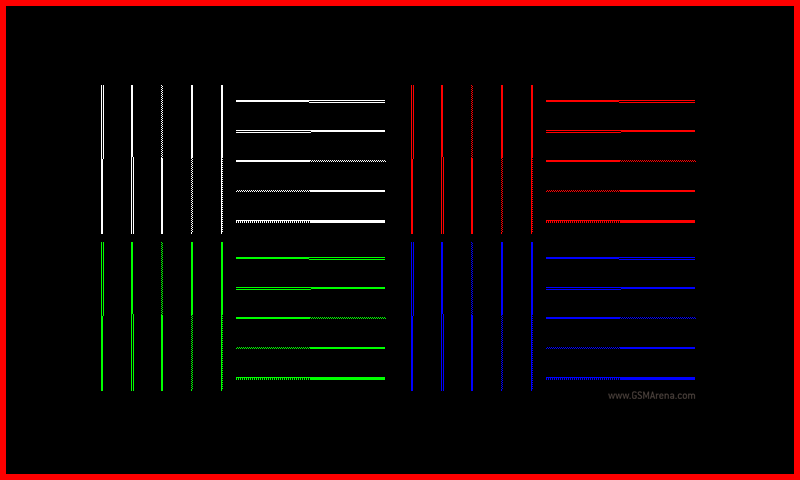
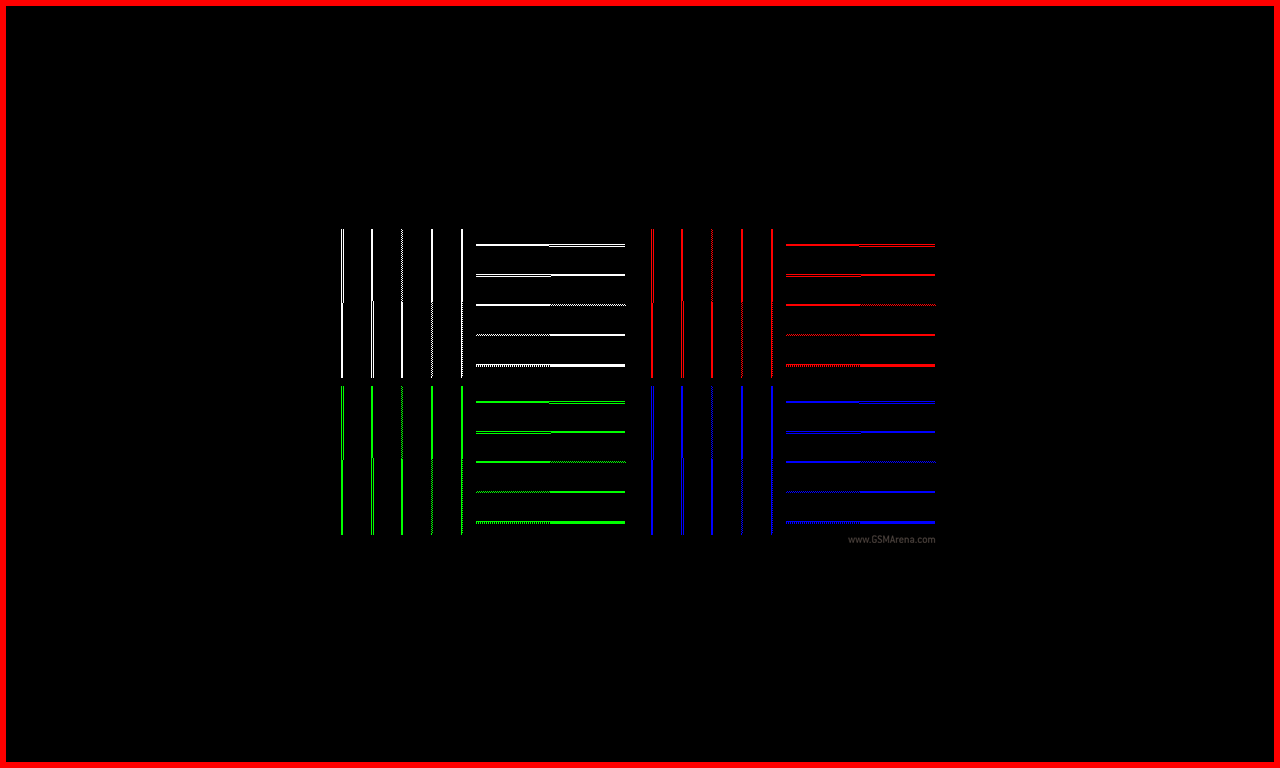
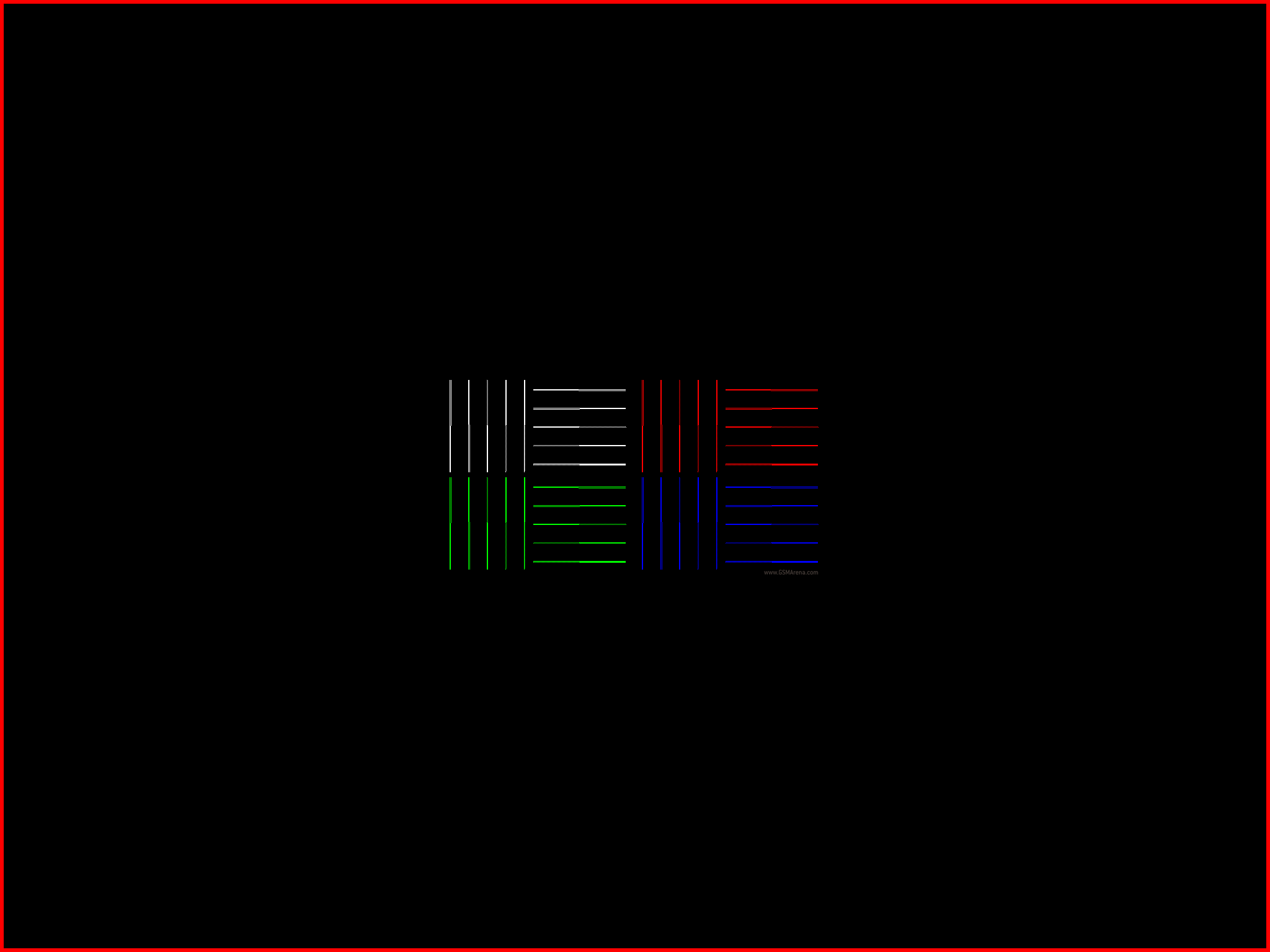
So here’s how this test works, you look at the lines – they are 2px thick, except that half is either split into two or pixelated in some way. Then you go back until you stop perceiving the difference between the two halves. Any further than that and any potential gains from more ppi become intangible. Write down that distance, it’s key to the answer we are looking for.

Here’s a zoomed-in part of the chart to give you a better idea what you’re looking at.

The test can be done on any monitor – but preferably, use it on a desktop or a laptop screen. Smartphone browsers and galleries have a tendency to scale images, which reduces their quality, and it can be difficult to get the image to display at 100% without any distortion from scaling.

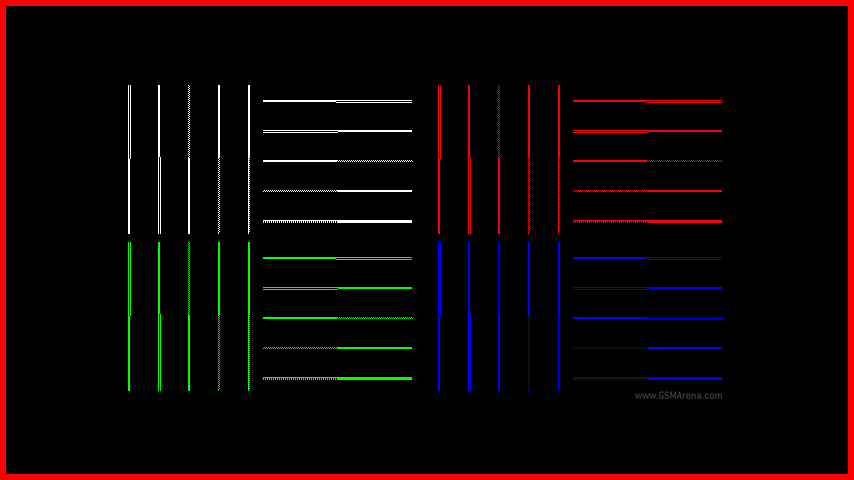
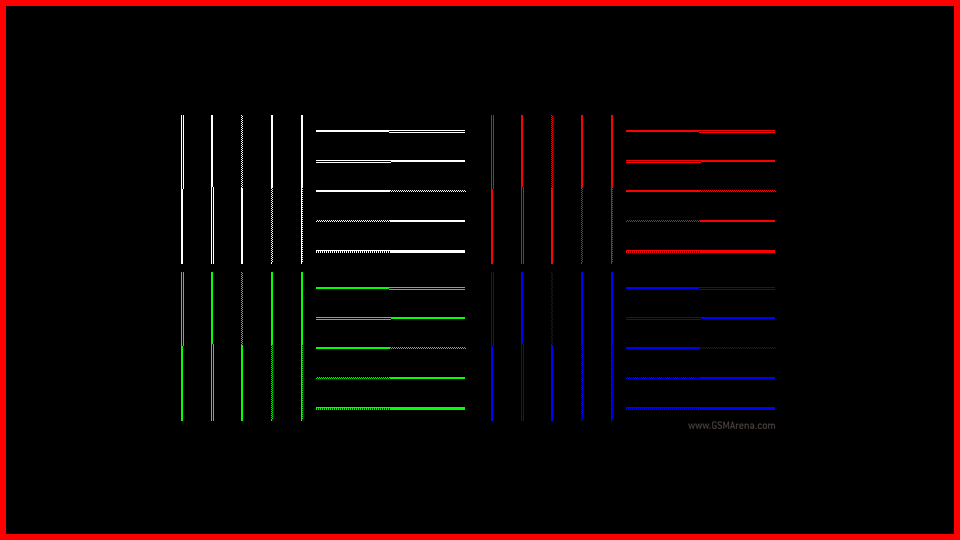
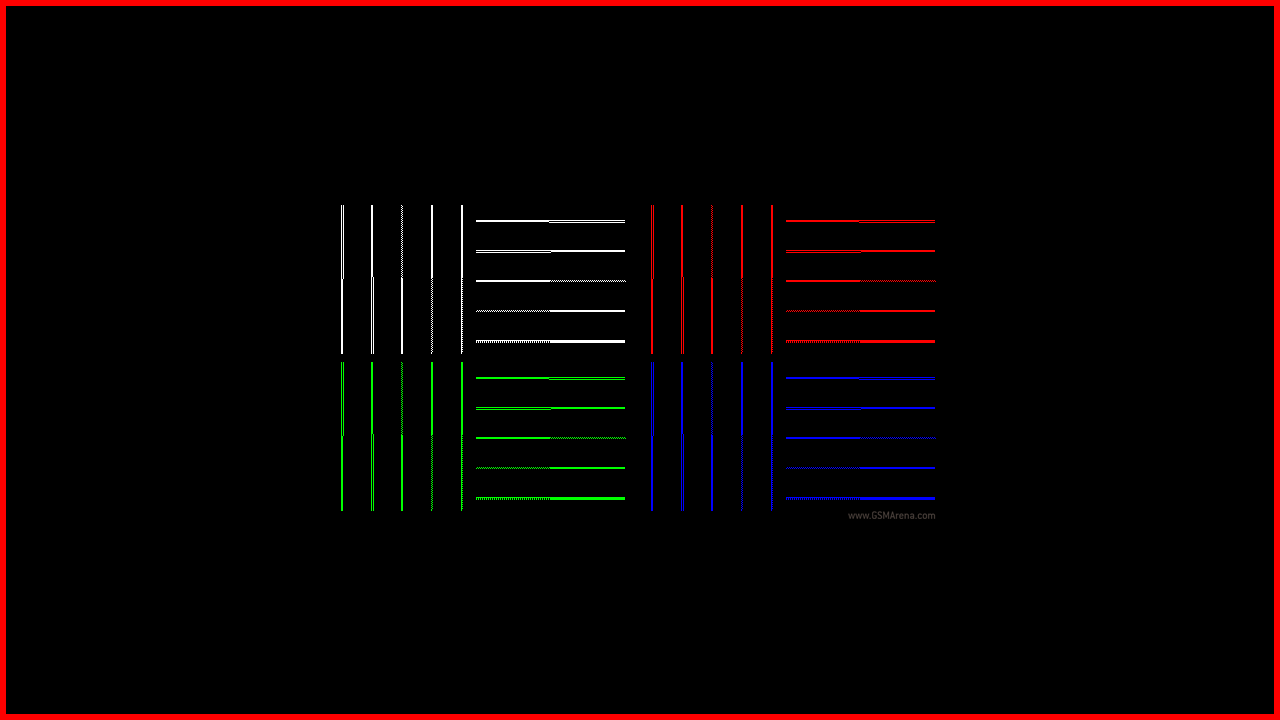
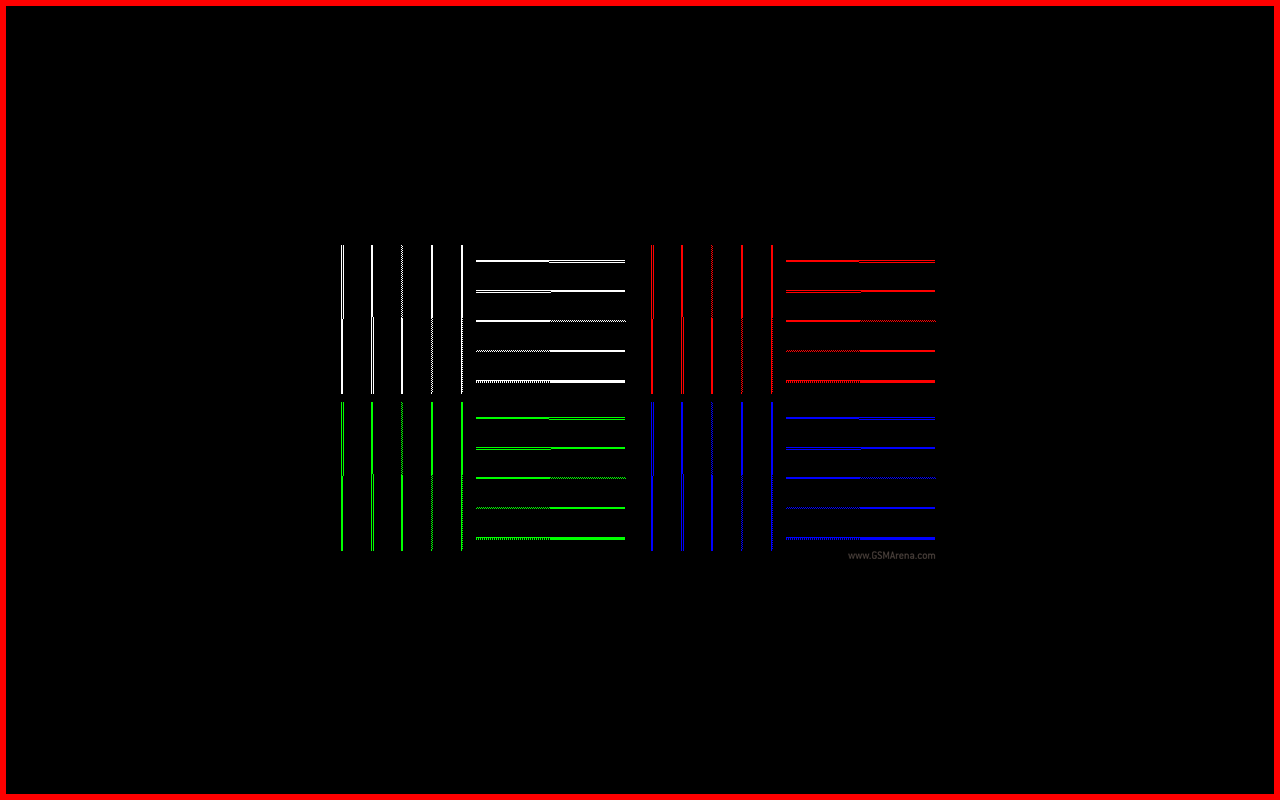
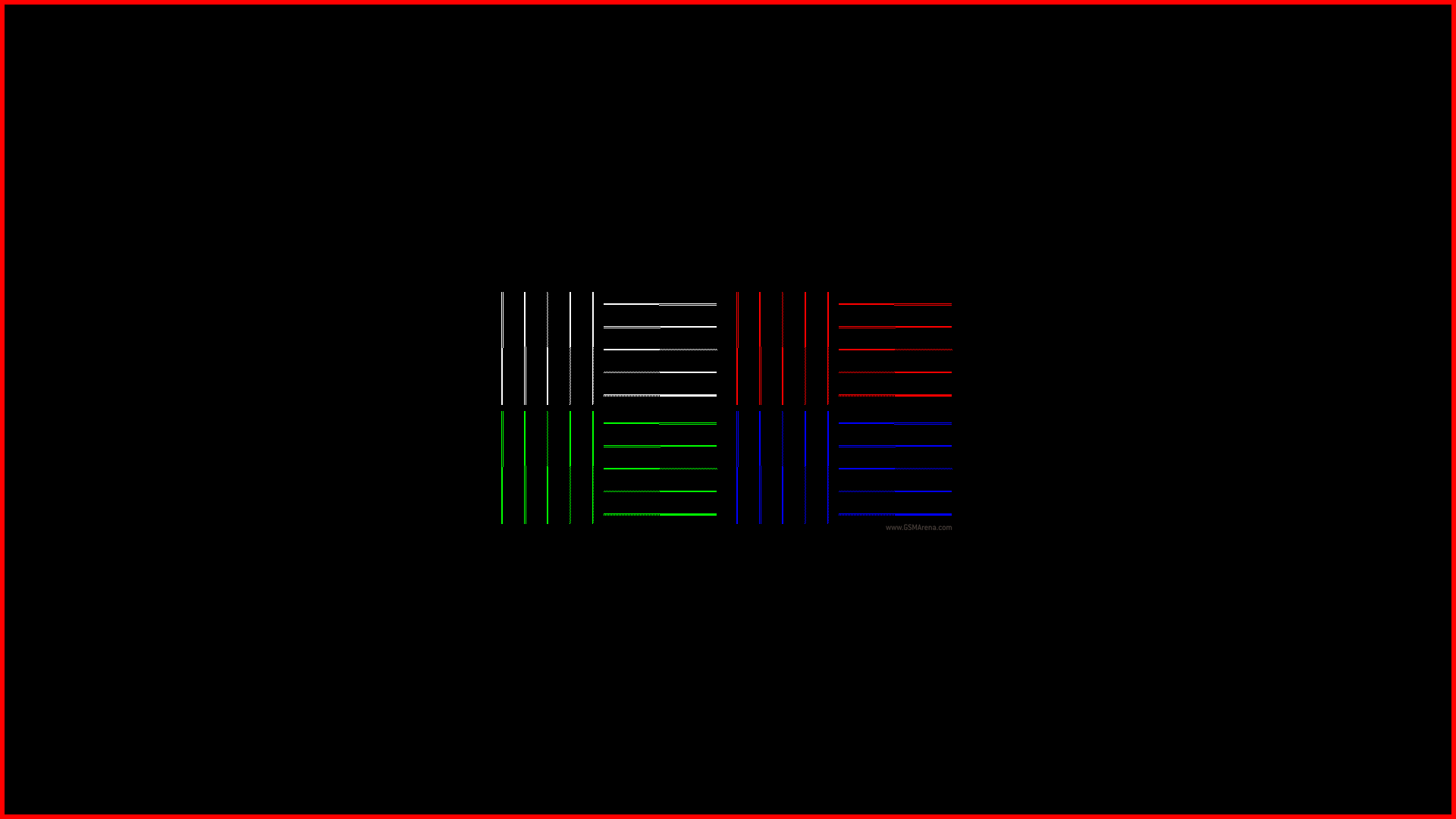
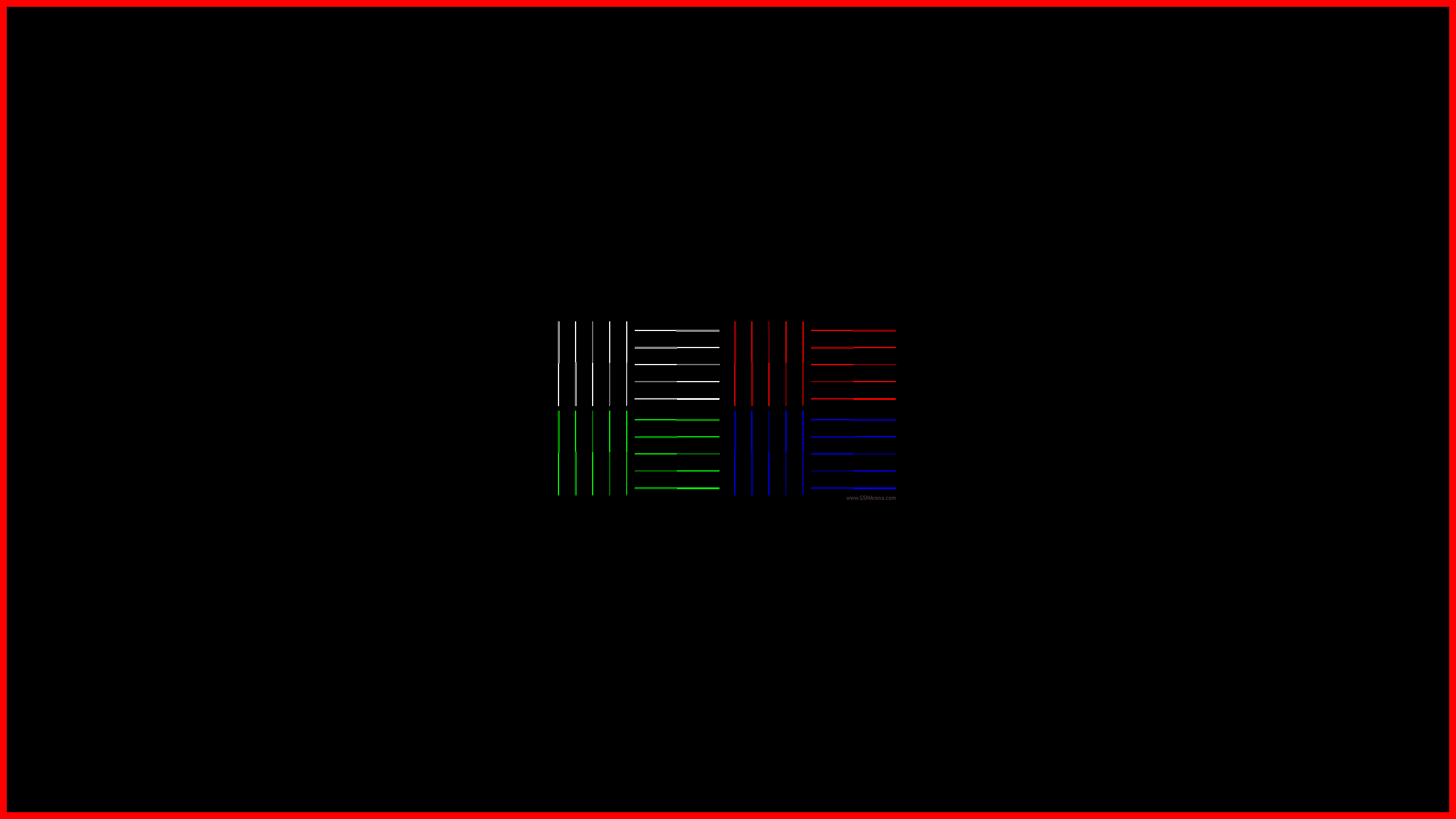
If you have to use a phone or tablet, but you’re having difficulty getting the image at 100% then you can use one of these alternative images below. There’s a version for each of the most popular resolutions and they have a red border so you know they fit exactly.

800 x 480854 x 480960 x 5401280 x 7201280 x 7681280 x 8001920 x 10801920 x 12002560 x 1440iPhone 4(s)iPhone 5(s)iPhone 6iPad (pre-Retina)iPad (Retina)

We’ve created a simple calculator to help you translate the distance you’ve measured to the answer – we are looking for the highest pixel density (pixels per inch) that you can possibly perceive at a distance chosen by yourself.

The chart and calculator

For the calculation you’ll need the resolution and size of the screen you’re using to view the chart. Resolution is detected automatically, but double-check to make sure. Then start backing up to see how far you have to get before you can’t tell apart the different halves of each line. Enter that number as maximum distance. Then enter the typical distance between your eyes and your smartphone, the calculator will handle the rest (you can switch between inches and centimeters).

You should be looking at the black lines mostly, but you may be interested to see how you fare with the other colors (the human eye does not see all colors equally well).

Screen resolution: × pxScreen diagonal: inchesPixel density:-ppiMaximum distance: inches cmTypical viewing distance: inches cmYou would benefit from at least -ppi.

The result shows the pixel density that is the minimum you need for a perfect viewing experience. A little more doesn’t hurt – even if you can’t separate individual pixels, smaller pixels can still create a slightly better image, but there’s no need to go much above that.

Keep in mind that a screen with fewer pixels per inch than what you calculated won’t necessarily have a bad image quality. As long as you don’t go much below the number and other components of image quality are good (things like contrast and color rendering), the image quality will be okay.

If you want you can post your calculated ppi in the comments, this will show what an average smartphone buyer needs and reveal if QHD screens are a marketing trick or actually needed.

Saturday, 6 December 2014

OnePlus denies rumors of shipping refurbished phones

It seems there have been a few complaints recently where people said they have received refurbished phones from OnePlus One. After the issue got escalated a bit, the company decided to speak on the matter to put it to rest.

In a forum post, OnePlus talks about the seven incidents where the buyers reported receiving a seemingly refurbished unit. The confusion stemmed from the fact that some units had open boxes, scratches on the unit, photos from camera already on the device, the OS already setup out of the box, and in one case, an extra screen protector on the unit.

OnePlus talked about each of the seven cases, with some having a fairly credible explanation as to why the phone couldn't be refurbished, and some cases where the company is still looking into the matter. However, it stressed at no point did they ship a refurbished unit.

There was also some doubts regarding whether or not the displays on the OnePlus One were actual Gorilla Glass 3 as the company claims, which has also been given a satisfactory answer, including an image of the blueprints of the phone with the name of the glass supplier mentioned on it.